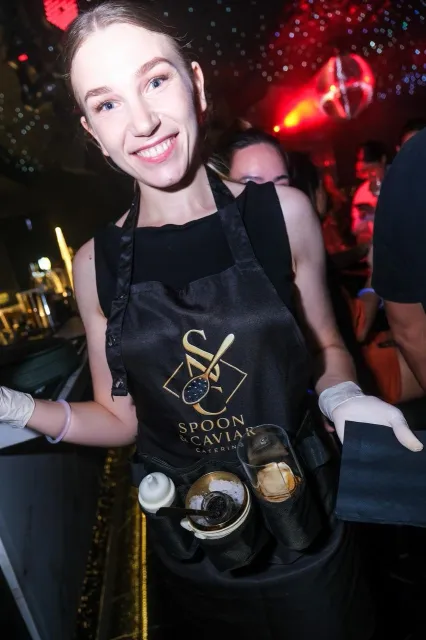
Metro Manila
Questions to Ask a Caterer Before You Book
Use this buyer checklist to compare luxury caterers in Metro Manila on scope, pricing, staffing, logistics and accountability.
Read guide →
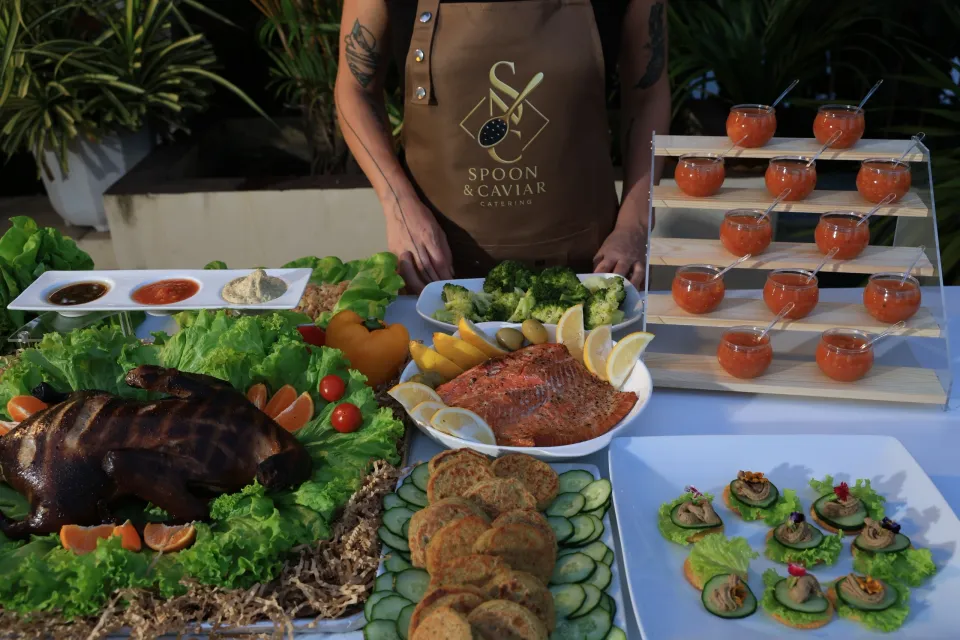
A clear guest primer on how to eat caviar, use blini and crème fraîche, and navigate caviar service at Metro Manila events.
Metro Manila · August 1, 2026
To learn how to eat caviar, start with a small spoonful and taste it on its own before adding blini or crème fraîche. Keep it cold, use a non-reactive spoon, and let the roe rest briefly on your tongue so you can notice its salinity, texture, and clean finish.
This guest-facing primer can be shared before a private dinner, wedding, or reception in Metro Manila. It explains the ritual without making it feel formal or intimidating.
Caviar is best approached in small tastes. Take about half a teaspoon with a mother-of-pearl, horn, glass, or other non-reactive spoon. Place it gently on your tongue rather than biting down immediately. Press the pearls lightly against the roof of your mouth to notice their firmness and release.
Try the first taste unadorned. This gives you a clear sense of the roe before accompaniments change its character. Sustainably farmed sturgeon roe can range from baerii, often dark and clean-tasting, to oscietra, which may show firmer pearls and nutty or mineral notes. The exact grade should be confirmed by the host or caterer before the event.
For the next taste, add a small amount to a warm or room-temperature blini. Crème fraîche can soften salinity and add richness, but it should support the caviar rather than cover it.
Caviar should arrive thoroughly chilled and remain cold during service. A sealed tin or service bowl is usually nested over crushed ice, with the lid kept nearby so the product can be covered between rounds. The ice should cool the container without allowing meltwater to enter it.
Metallic flavours can interfere with delicate roe. Traditional service therefore uses mother-of-pearl, horn, glass, or food-safe non-reactive utensils. Stainless steel may be practical in some professional settings, but silver and other reactive metals should be avoided.
Metro Manila conditions require active temperature control. A ballroom in Makati may be heavily air-conditioned, while a garden in Alabang, a rooftop in BGC, or a residence in Quezon City can be warm and humid. Traffic between the commissary and venues in Ortigas, San Juan, or Manila also makes timed dispatch and insulated transport essential. Once presented, caviar should be served in controlled batches rather than left exposed for a long reception.
Blini are soft, neutral carriers that make caviar easy to enjoy while standing at a cocktail event. Use one that is small enough for one or two bites. Place a restrained spoonful of crème fraîche on the blini, then add the caviar on top so the pearls remain visible and distinct.
Simple accompaniments are preferable because caviar has a fine balance of salinity, richness, and texture. Chopped egg, chives, potato, or mild onion can work when offered sparingly. Strong citrus, sweet sauces, truffle oil, heavy spice, and sharp raw onion tend to dominate the roe.
Drinks should cleanse the palate rather than compete with it. Chilled brut Champagne, dry sparkling wine, or cold vodka are traditional choices. Still water should always be available. For a non-alcoholic pairing, choose cold mineral water or a dry, lightly sparkling drink without pronounced sweetness.
At a roaming reception, wait until the server has completed the presentation before taking a piece. If caviar is spooned tableside, hold the blini or canapé level and allow the chef to determine the portion. Eat it promptly so the base does not soften and the roe stays cool.
At a seated dinner, follow the service order set by the host. Caviar may appear as a first taste, a composed starter, or a garnish applied at the table. There is no need to perform a formal tasting gesture. Quiet attention to the aroma, pearl size, texture, and finish is enough.
For shared service, avoid double-dipping or using your own cutlery in the tin. Do not move caviar from one canapé to another with your fingers. If you are unsure about an accompaniment or dietary concern, ask the service team before taking a portion.
Hosts can include a concise note with the menu:
> Begin with a small taste on its own. Let the pearls rest briefly on your tongue, then press them gently against the roof of your mouth. Follow with blini and a little crème fraîche if you wish.
The style of service should match the venue and guest flow. A chef-led station suits hotel ballrooms, private dining rooms, galleries, and residences where guests can approach in a steady sequence. Passed caviar canapés work well when movement is more fluid. Tableside service brings structure to intimate dinners and VIP receptions.
Spoon & Caviar offers three formats for events in Metro Manila:
Service is available across Makati, BGC and Taguig, Ortigas and Pasig, Quezon City, Alabang, San Juan, and Manila. Tagaytay, Batangas, Rizal, and Pampanga or Clark can also be served with a travel and cold-chain fee. For every caviar service, the sustainably farmed sturgeon roe grade, from baerii to oscietra, is confirmed with the client before the event.
Send your event date, venue, and guest count through the inquiry form. You may also contact Spoon & Caviar on WhatsApp at +63 915 325 2610.
Eat caviar by taking about half a teaspoon with a non-reactive spoon, tasting it on its own, and pressing the pearls gently against the roof of your mouth. Avoid aggressive chewing, then try a second taste with a small blini and restrained crème fraîche.
Mother-of-pearl, horn, glass, or another food-safe non-reactive spoon is best for caviar because it does not add a metallic flavour. Silver and other reactive metals should be avoided, especially when tasting delicate sturgeon roe on its own.
Caviar should be served thoroughly chilled in its tin or a service bowl set over crushed ice, with small non-reactive spoons. In Metro Manila's heat and humidity, it should be presented in controlled batches and kept covered between rounds rather than left exposed throughout a reception.
Caviar pairs well with small blini, restrained crème fraîche, chilled brut Champagne, dry sparkling wine, cold vodka, or mineral water. Strong citrus, sweet sauces, heavy spice, truffle oil, and sharp raw onion can overwhelm its salinity, texture, and finish.
Send your date and guest count and you get a full quote back, including travel and cold-chain costs for venues outside the metro.
Metro Manila
Use this buyer checklist to compare luxury caterers in Metro Manila on scope, pricing, staffing, logistics and accountability.
Read guide →
Metro Manila
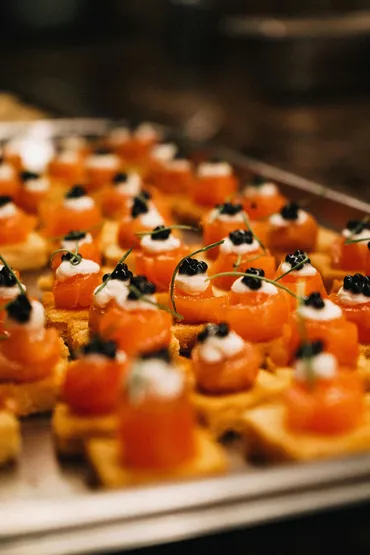
Plan a polished Metro Manila New Year’s Eve party with canapés, midnight caviar and service formats designed to stay fresh after the countdown.
Read guide →
Metro Manila
A practical guide to one-hand food, discreet service and cold-chain planning for art gallery openings across Metro Manila.
Read guide →