Metro Manila
Questions to Ask a Caterer Before You Book
Use this buyer checklist to compare luxury caterers in Metro Manila on scope, pricing, staffing, logistics and accountability.
Read guide →
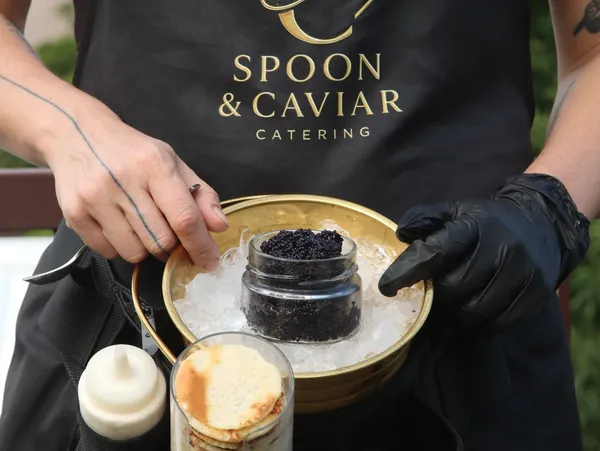
Our caviar comes from responsibly managed sturgeon farms, with species, grade and provenance confirmed before each Metro Manila event.
Metro Manila · September 1, 2026
Sustainable caviar in the Philippines should come from farmed sturgeon, with its species, grade and provenance made clear before service. At Spoon & Caviar, we source sustainably farmed sturgeon roe and confirm the selected grade, from baerii to oscietra, with each client before the event.
This approach protects wild sturgeon populations and gives hosts a clearer view of what they are serving. It also supports consistent handling from the source to venues across Metro Manila.
Sturgeon are ancient, slow-maturing fish. Decades of pressure from habitat loss, dam construction and illegal harvesting placed many wild populations at serious risk. Responsible aquaculture provides an alternative: sturgeon are raised in managed environments rather than taken from vulnerable wild stocks.
For Spoon & Caviar, sustainability starts with one firm standard. Our caviar is farmed sturgeon roe. We do not present unrelated fish roe as caviar, and we do not use vague descriptions to avoid naming the species or grade.
A credible sourcing conversation should establish:
Sustainability does not mean every tin tastes the same. Species, diet, water quality, fish maturity, salting and maturation all affect texture, bead size and flavour.
The Philippines is not a major sturgeon-producing country, so caviar served here generally enters through specialist import and distribution channels. We work through compliant suppliers that can identify the product and maintain refrigerated handling. Availability can change by harvest, shipment and import timing, which is why we confirm the final selection rather than promising an unspecified luxury label.
We assess sourcing information alongside the condition of the product. A prestigious name cannot compensate for weak traceability, temperature abuse or an unsuitable tin size. We look for clear identification, intact packaging and a cold chain appropriate for fresh caviar.
Before an event, we confirm the caviar grade with the client. Where available and relevant, we can also discuss the producer, country of origin, species, bead profile and expected flavour. This lets a host choose based on the roe itself, not just price or status.
Baerii caviar comes from Siberian sturgeon. It often has a fine to medium bead, a clean salinity and an approachable mineral or nutty finish. It can be a strong choice when caviar is being served to a mixed group, including guests tasting sturgeon roe for the first time.
Oscietra is associated with Russian sturgeon. Its beads are often firmer and can range in colour from darker grey to amber or olive tones. Flavour may be layered, marine and distinctly nutty. Exact characteristics vary by farm and batch, so colour alone is not a reliable measure of quality.
The right grade depends on more than prestige. We consider:
Caviar in Motion, our chef-led tableside caviar service with blini and creme fraiche, is quoted per event based on caviar grade and guest count. The chosen grade is agreed before service.
Transparency should continue after the product is selected. We plan quantities against the agreed format, record the intended grade and keep the caviar sealed and cold until preparation or service. This reduces unnecessary exposure to air and temperature shifts.
Packaging can carry useful identifiers, including species or trade name, producer details, lot information and regulatory markings. Imported sturgeon products may also be subject to wildlife-trade controls and local import requirements. The exact documents available to an end client can differ by supplier and shipment, but the product should never be described more precisely than the records support.
We also avoid claims that cannot be verified. “Sustainable” is not shorthand for wild, local or organic. In our service, it specifically means the roe comes from sustainably farmed sturgeon and is sourced through channels that provide product identification and support proper refrigerated handling.
Responsible sourcing can be undone by poor transport. Caviar is highly temperature-sensitive, and Metro Manila creates practical risks: long traffic delays on EDSA and C-5, loading queues in Makati or BGC, restricted access at Ortigas towers, and tropical heat and humidity at residential or outdoor venues.
We build transport and setup around those conditions. The caviar remains in controlled cold storage during travel and is brought out in quantities suited to the pace of service. We avoid leaving an open tin on a warm table for visual effect. At the venue, we coordinate refrigerator access, loading timing and the service position before guests arrive.
Our core service area covers Makati, BGC and Taguig, Ortigas and Pasig, Quezon City, Alabang, San Juan and Manila. We also serve Tagaytay, Batangas, Rizal and Pampanga or Clark with a travel and cold-chain fee, reflecting the additional distance, insulated transport and temperature controls required.
Ask direct questions when comparing caviar for a private event, brand dinner or corporate reception. A caterer should be able to say whether the roe is from sturgeon, whether it is farmed, what grade is proposed and how it will stay cold from dispatch through service.
The caviar itself is quoted according to grade and quantity. For the surrounding menu, The Canape Edit starts from PHP 850 per head, while The Cocktail Experience starts from PHP 1,100 per head. Caviar in Motion is quoted per event based on the confirmed caviar grade and guest count.
Transparency helps us recommend the right tin rather than the most expensive one. It also gives the client a clear account of what will arrive, how it has been identified and how it will be handled in Manila conditions.
Send your event date, venue and guest count through the inquiry form. You may also contact us on WhatsApp at +63 915 325 2610.
Yes. Spoon & Caviar serves sustainably farmed sturgeon roe rather than caviar taken from vulnerable wild sturgeon populations. The proposed grade, from baerii to oscietra, is confirmed with the client before the event.
Most caviar served in the Philippines is imported from overseas sturgeon farms through specialist suppliers. Spoon & Caviar reviews product identification, available provenance information, packaging condition and refrigerated handling before selecting roe for Metro Manila events.
Baerii comes from Siberian sturgeon and commonly offers fine to medium beads with clean, mineral or nutty flavours. Oscietra comes from Russian sturgeon and is often firmer, with a layered marine and nutty profile; exact colour, texture and taste vary by farm and batch.
Caviar in Motion is quoted per event based on the confirmed caviar grade and guest count. Supporting menus start at PHP 850 per head for The Canape Edit and PHP 1,100 per head for The Cocktail Experience; travel and cold-chain fees apply for Tagaytay, Batangas, Rizal and Pampanga or Clark.
Send your date and guest count and you get a full quote back, including travel and cold-chain costs for venues outside the metro.
Metro Manila
Use this buyer checklist to compare luxury caterers in Metro Manila on scope, pricing, staffing, logistics and accountability.
Read guide →
Metro Manila
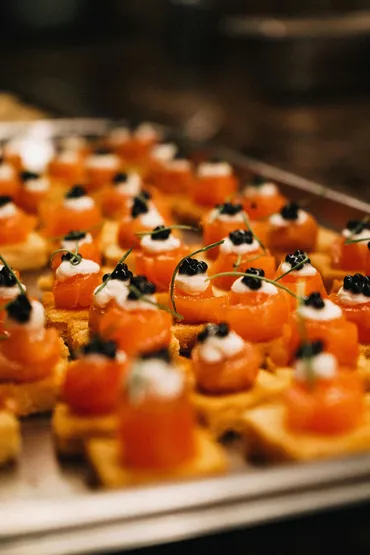
Plan a polished Metro Manila New Year’s Eve party with canapés, midnight caviar and service formats designed to stay fresh after the countdown.
Read guide →
Metro Manila
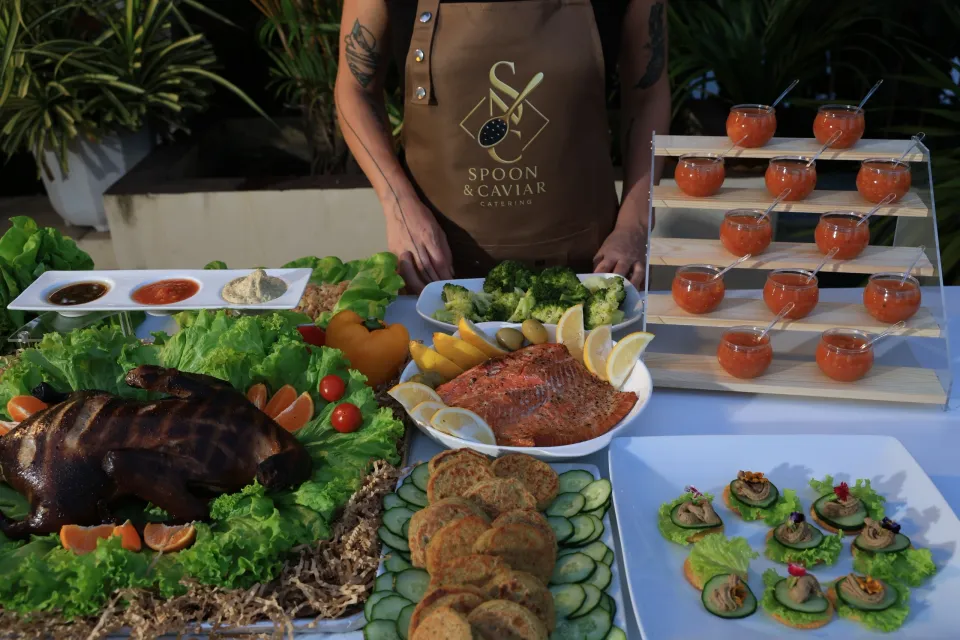
A practical guide to one-hand food, discreet service and cold-chain planning for art gallery openings across Metro Manila.
Read guide →